
REVIEW · PLAIN OF JARS & THE BOLAVEN PLATEAU
Plain of jars tour with local guide
Morning starts with a megalithic mystery in mind. You get a focused day around the Plain of Jars, plus two very human stops, the spoon-making village and the former capital of Xieng Khouang. I like the way the tour uses an English-speaking driver-guide and keeps you moving at a comfortable pace, with real time to look around on your own.
I also like that the day isn’t just jar pictures. You learn how local people make spoons from aluminum bomb casings, and you get context for what happened during the Vietnam War at Muang Khoun. The one thing to consider is that you’ll do a short walk across rice fields, so comfy shoes and sun protection matter if conditions are muddy or hot.
In This Review
- Key highlights (what you’ll remember)
- Plain of Jars in one solid day from Phonsavan
- Price and value for a private guide day
- Morning start at Ban Naphia spoon village
- Plain of Jars Site 3: rice fields, walking, and first scale
- Lunch at Lak khai, then straight to Site 2
- Muang Khoun after the Vietnam War, plus That foun and Wat phia wat
- Plain of Jars Site 1 and the big number moment
- Lunch, pace, and what to bring so the day feels easy
- Who this tour is best for (and who should think twice)
- Should you book the Plain of Jars tour with a local guide?
Key highlights (what you’ll remember)
- Ban Naphia spoon village, where aluminum bomb casings are turned into spoons for tourists and local market trade
- A guided stroll across rice fields to Plain of Jars Site 3, including notes about rice season
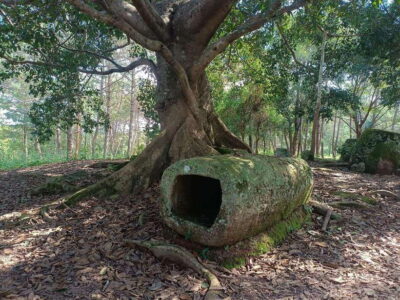
- Plain of Jars Site 2, known for taller, longer jars and a big tree growing inside the site
- Muang Khoun, the heavily bombed former capital, plus visits to That foun and Wat phia wat
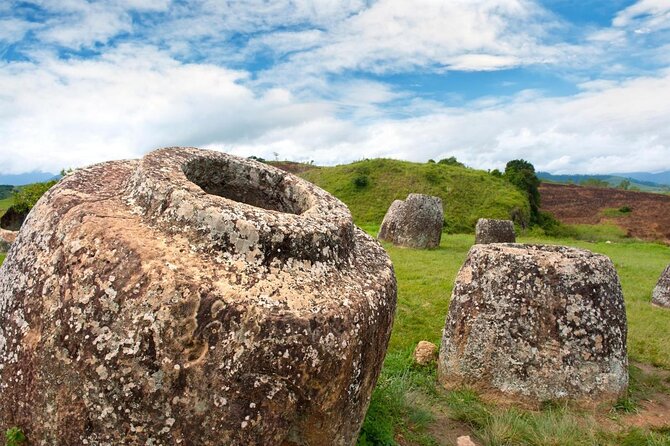
- Plain of Jars Site 1, with 334 jars scattered around, estimated at over 6 tons
Plain of Jars in one solid day from Phonsavan
If you only have a day in Phonsavan, this is the kind of plan that makes sense. The day links the Jar sites into one route, so you are not bouncing around for information. And because the tour is set up as a private outing, you can ask questions without that awkward “hold on, everyone wait for me” feeling.
You’ll be supported by an English-speaking driver-guide, and that matters here. These jar sites are easier to understand when someone explains what you are looking at and why locals connect this place to their lives. The best part for me is the balance: enough structure to keep things interesting, but not so strict that you feel trapped.
The day runs about 8 hours, and it includes lunch, admission fees, and transportation. At $146, you are paying for the whole package, not just a seat in a vehicle. If you can travel with others, it tends to make the value even better because you are sharing the private transport cost.
Further out: the jar sites and the Bolaven, trip by trip
Price and value for a private guide day
Let’s talk money like adults. The price is $146, and the tour includes private transportation, an English-speaking driver-guide, all fees and taxes, and lunch. What isn’t included is only soft drinks, so you are not hit with surprise “pay at every step” moments.
The value angle is simple. Admission is included for the jar sites you visit, and your guide is also doing the interpretation, not just pointing. For a tour that spans multiple sites and areas of Phonsavan, you are basically buying time and context. That often beats DIY travel, especially if you want a smooth pickup and drop-off.
One more practical point: there are group discounts mentioned, which can help if you are booking with friends or family. Also, you get a mobile ticket, so you do not need to worry about printing anything.
Morning start at Ban Naphia spoon village
Your day begins around 8:30 a.m. with pickup from your accommodation. From there, you head to the Ban Naphia area in the Phaxay district for about a 30-minute stop. You’ll see a town with over thirty families, where most people earn their income by selling spoons made from aluminum bomb casings.
This stop is special for a few reasons. First, it gives you something to hold in your hands, not just something you look at from the outside. Second, it shows how people have repurposed material tied to conflict into everyday goods. That kind of continuity, turning damage into income, is one of the most important themes you can catch in this region.
You get free admission here, which is nice, but the real “value” is the conversation. Expect the guide to connect the spoon-making village to daily life and local market trade, not just to treat it like a souvenir shop stop. If you plan to buy something, you’ll have time to browse and ask questions without feeling rushed.
Possible drawback: this is also where you might be tempted to shop too much early in the day. If you want to keep your budget under control, I’d set a rough spending limit for this first stop and then decide later if you really want a second purchase.
Plain of Jars Site 3: rice fields, walking, and first scale
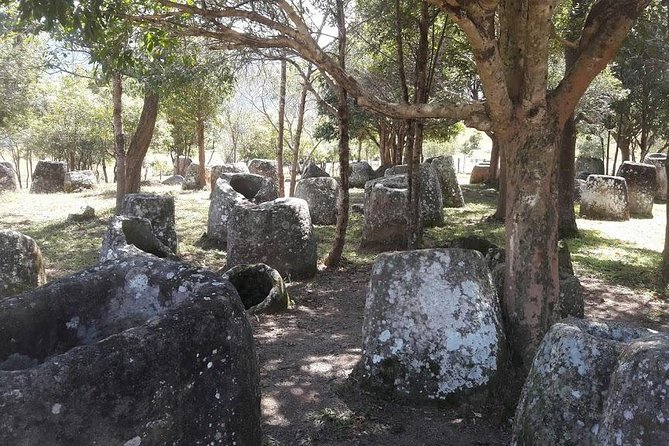
Around 10:00 a.m., you visit Plain of Jars Site 3, located in Ban Xieng di. Before you reach the jars, there’s a short walk, about 10 minutes, across a rice field. The guide also shares extra details about rice season, which makes the walk more than just getting from point A to B.
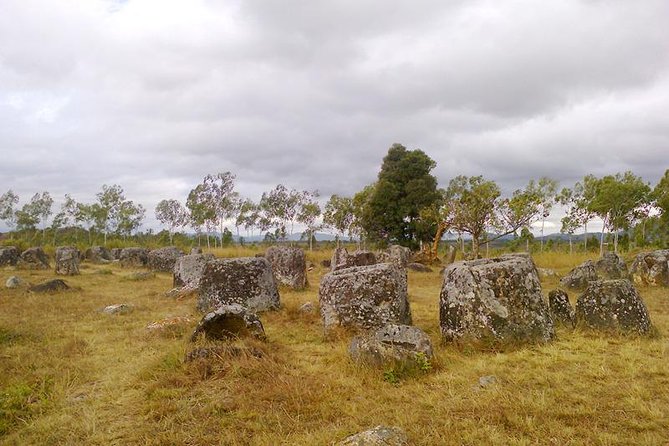
This site is usually your “introduction” moment to the Plain of Jars. You start seeing the arrangement and scale, and you begin to understand why locals would treat these structures with care. Even if you are not a geology person or an archaeology person, the visual impact hits fast, and a guide helps you look with purpose.
The stop lasts about 45 minutes, with admission included. That timing is good. It’s long enough to walk around and take photos from a few angles, but not so long that you lose your energy before the later sites.
Practical consideration: rice fields can be muddy depending on the season. Wear shoes that can handle uneven ground, and bring something to protect you from sun and insects. If you hate stepping in wet soil, this is the part of the day where you’ll feel it.
Lunch at Lak khai, then straight to Site 2
You’ll have lunch at Lak khai before heading to Plain of Jars Site 2 around 12:00 p.m. Lunch is included in the tour price, and in a day like this, it is more than a break. It keeps your energy up so the afternoon doesn’t feel like a shuffle.
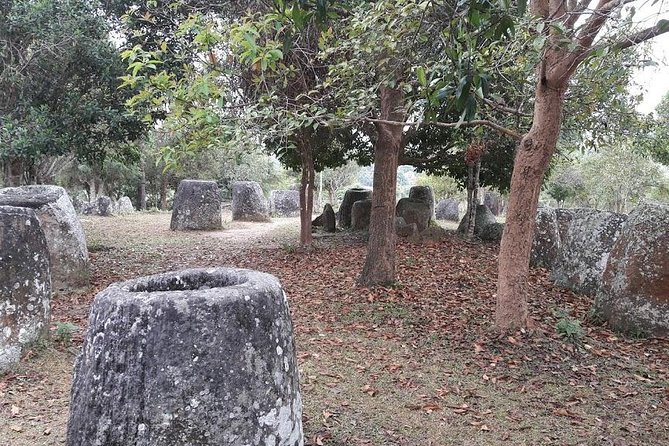
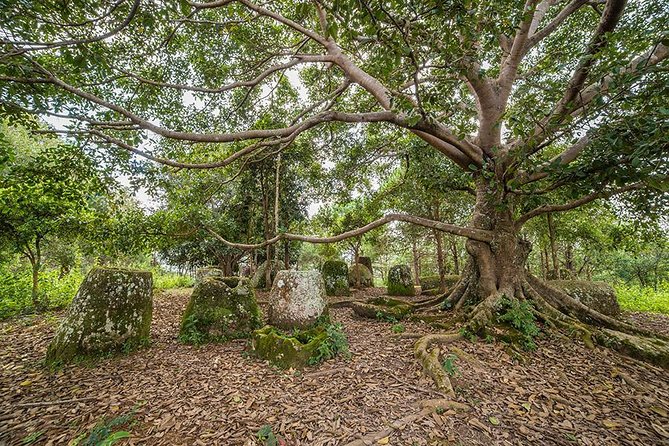
When you arrive at Site 2, you’ll spend about 35 minutes. This is one of the stops many people remember because of the way the site feels tied to the environment. The jars here are described as taller and longer than Site 3-1, and you’ll notice the big tree growing inside the area.
That tree detail changes how you experience the jars. Instead of only seeing stone shapes scattered across open space, you start seeing a living structure where time has done its work. The guide’s explanation matters because it helps you connect what you are seeing to local interpretations and the logic behind the sites.
Admission is included, and the vibe is calm but focused. It’s the kind of stop where you might want to slow down and look without rushing for the next photo.
Possible drawback: shade may be limited depending on the position of the tree and the time of day. If you are traveling in the hotter hours, plan on bringing a hat or light layer so you do not feel cooked by the time you reach the next stop.
Muang Khoun after the Vietnam War, plus That foun and Wat phia wat

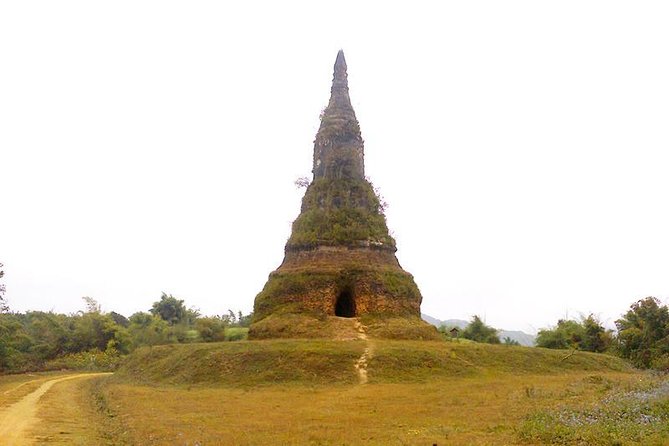
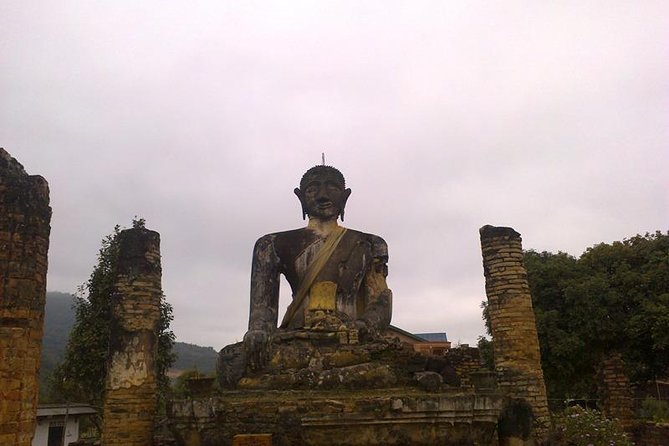
Around 2:00 p.m., you shift from the jar sites to Muang Khoun, the former capital of Xieng Khouang. This area was heavily bombed during the Vietnam War, specifically the years 1964 to 1973. The tour continues with stops at That foun and Wat phia wat.
This portion of the day adds weight and context. The Plain of Jars sites can feel like a standalone landscape of stone, but Muang Khoun reminds you the region also carries a more recent human history, with direct impact on daily life and communities. You get about one hour here, and admission is free.
At That foun and Wat phia wat, you’re not just ticking boxes. You are seeing how places of meaning survive and transform after destruction. A good guide helps you connect the dots between the past represented by the jars and the much more recent history tied to the war.
If you prefer tours that are mostly light and scenic, this is the point where the tone becomes more serious. It is still respectful and straightforward, but it will require a bit more attention from you.
Plain of Jars Site 1 and the big number moment
Your final Plain of Jars stop is around 3:30 p.m., at Site 1. This is the largest count you’ll hear in the day: 334 jars scattered around, with an estimated weight above 6 tons. The admission is free, and you get about 40 minutes here.
If you love scale, this is where the day clicks. By now, you have seen multiple sites, so you can compare. Site 1 feels like the “main” concentration, and the sheer number gives you a clearer sense that you are not looking at a handful of stones. You are looking at a whole system of megalithic structures that were placed and preserved enough to be visited today.
The tour includes transport to the final location, with drop-off back at your hotel. That makes the end of the day easy. You don’t need to figure out rides, pricing, or navigation after you are tired from walking and sun.
Lunch, pace, and what to bring so the day feels easy
This is a well-paced 8-hour format, and I like the way the timing spreads the heavier moments across the day. You start early enough to catch morning light, you get a real lunch break before Site 2, and you end with Site 1 before drop-off.
Here’s what the inclusions cover so you can plan smoothly:
- Private transportation from pickup to drop-off
- English-speaking driver-guide
- All fees and taxes for the stops
- Lunch
- Admission for the jar sites you visit
Soft drinks are not included, so bring water and plan to buy any drinks you want. Also, because you walk across a rice field to reach Site 3, shoes matter. If you can, wear closed-toe footwear with decent grip. A light layer helps too, even in warmer seasons, because travel days can swing between heat and cooler indoor spaces during transport.
A small but important tip: if you want photos, do not spend all your time at one angle. Give yourself a few minutes to walk around after you arrive, then pause. Your brain will thank you later when you sort your pictures.
Who this tour is best for (and who should think twice)
This tour fits best if you want a guided day that covers the key Jar sites without leaving you to manage logistics. It’s also a good match if you like cultural stops that connect the big sights to daily life, like the spoon-making village.
It’s private, meaning only your group participates, which is ideal if you’re traveling with kids, friends, or anyone who prefers a quieter pace. Most travelers can participate, and the tour is described as near public transportation, which can be helpful if you are combining it with other parts of your day.
Who might think twice: if you dislike walking across uneven ground, pay attention to the rice field walk to Site 3. It’s short, around 10 minutes, but it is real.
Also, the day has a heavier history component at Muang Khoun. If you want a purely light, picture-only tour, you may still enjoy it, but it will have a more reflective side.
Should you book the Plain of Jars tour with a local guide?
I’d book it if you want the Plain of Jars experience done properly in one day, with context and smooth logistics. The price makes sense because admissions for the key jar stops are included, lunch is included, and you get an English-speaking guide who can explain what you’re seeing, not just drive you between dots on a map.
I’d skip it or ask extra questions before booking if walking on uneven ground is a deal-breaker for you, or if you only want scenic stops and nothing tied to the Vietnam War history. Otherwise, this is the kind of day tour that leaves you with more than photos. You come away understanding how the region’s past and daily life connect, from the jars to the spoon village.
If you want, tell me your travel month and whether you’re visiting solo or with others, and I can suggest how to time the day for weather comfort and photo stops.
More Days Out in Laos
More Tour Reviews in Phonsavan
More Jar Sites and Plateau Runs
Just added to the guide: more things to do in Laos
- Plain of jars tour with local guide★ 4.5 · 8 reviews
Plain of Jars & the Bolaven Plateau, side by side.
 ★ 4.6Mystic Falls & Timeless Temples of Southern Laos TourFrom $9721 reviews
 ★ 5.0Plain of jars share group tourFrom $994 reviews
 ★ 3.5Full Day Crossing the Bolaven PlateauFrom $1254 reviews
 ★ 5.0Plain of jars private tourFrom $1103 reviews
 ★ 5.03 Days The Plain of Jars and Xieng Khouan (Depart from Luang Prabang)From $5403 reviews
Every list this tour turns up on