
REVIEW · PLAIN OF JARS & THE BOLAVEN PLATEAU
3 Days The Plain of Jars and Xieng Khouan (Depart from Luang Prabang)
Three days, one unforgettable corner of Laos. This route to Phonsavan and Xieng Khouan pairs Plain of Jars with Tham Phra Cave, hill-tribe villages, and a visit to the MAG UXO learning center, so you see both the legend and the after-effects. I love how the day is paced with clear stops, and I also love the way strong guides, like Vone, keep you on track with calm, practical explanations.
The main drawback is simple: it is a long, early start from Luang Prabang, and the schedule can feel like a workout at times, especially on travel days. If you are sensitive to long drives or want a slow, lazy itinerary, you might find the pace too full.
In This Review
- Key Highlights You Should Know
- From Luang Prabang to Phonsavan: The Long Road That Sets the Tone
- Hill-Tribe Villages Along the Way: Small Encounters, Big Perspective
- Tham Phra (Buddha Cave): Old Images and Wartime Use
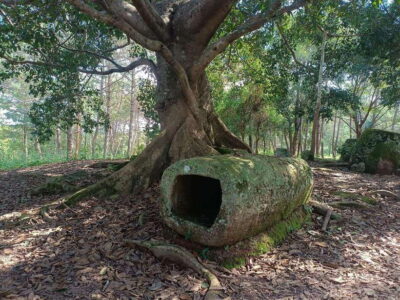
- The Plain of Jars: Legends With Real-World Context
- Jar Site 2 and Ban Na Pia: UXO Scrap Turned Into Spoons
- Wat Phiawat and Muang Khoun: Traces of Royal Power
- MAG UXO Visitor Information Centre: Learning Without Being Cliché
- Mulberries Organic Silk Farm and Market Morning
- Price and Logistics: Is $540 Good Value?
- Guides Make It Easier: Vone, Tin, and Mr. Latte
- Who This Tour Fits Best (and Who Should Skip It)
- Should You Book This Plain of Jars and Xieng Khouan Tour?
- FAQ
- How long is the tour?
- What is the starting point in Luang Prabang?
- Is pickup offered?
- What is the meeting start time?
- Where does the tour end?
- Are meals included in the price?
- Are admission fees included?
- What about transportation?
- Is the tour private?
- Can I cancel for a refund?
Key Highlights You Should Know
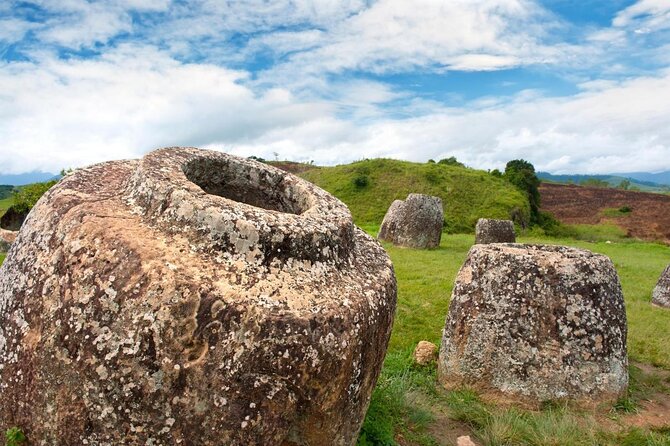
- Plain of Jars, plus the “jar sites” spacing so you understand the geography, not just the photos
- Tham Phra (Buddha Cave) where you see old images and how caves were used as wartime shelter
- Jar Site 2 near Hai Hin Hoo Sarat, plus Ban Na Pia spoons made from UXO scrap
- Wat Phiawat in Muang Khoun, with royal palace history tied to Phuan and colonial eras
- MAG UXO Visitor Information Centre, for straight talk about unexploded ordnance
- Mulberries Organic Silk Farm, a fair-trade style stop that shows silk from cocoons to scarves
From Luang Prabang to Phonsavan: The Long Road That Sets the Tone
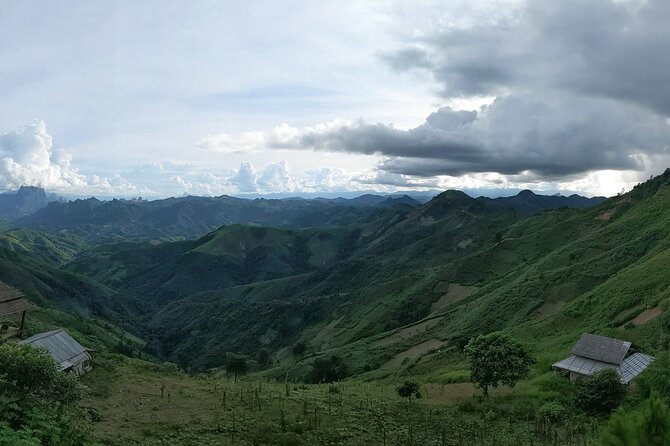
You start in Luang Prabang with a morning departure, typically around 7:30 am, and the drive to Phonsavan is about 260 km. That is not a quick hop. It is the kind of day where the bus time becomes part of the experience, because the scenery and the village life you pass slowly change. You also get chances to break the drive with stops and short walks, not just straight highway miles.
This matters because Xieng Khouan is not a “one attraction” place. It is a whole region tied to history, rural livelihoods, and the lingering reality of war. Doing this by road from Luang Prabang helps you feel the transition from a more tourist-centered base to a quieter, less developed area. You also get a first look at the hill-tribe communities you will meet more directly later.
If you are planning your day around comfort, pack for warmth and dust. Even when you have air-conditioned vehicle comfort for most of the ride, roadside conditions can still be dry and change fast. A hat and a light layer go a long way here.
Staying on in Luang Prabang? Here is what else fills a day there

Hill-Tribe Villages Along the Way: Small Encounters, Big Perspective
On Day 1, before you reach Phonsavan, you stop to see varied Hmong and other hill tribe minority villages along the road. This is not a staged show. The description emphasizes friendliness and welcome, and that is usually what you want from these roadside village stops: brief, respectful contact and a chance to watch everyday life without turning it into a performance.
The best way to get value from this segment is simple. Stay present. Look at how people live, and ask only basic, respectful questions if your guide encourages it. You are not there to “collect” cultural facts. You are there to understand that people live their normal day in places that outsiders often only know from war stories or jar legends.
One practical tip: keep your expectations modest. These stops are about exposure, not long guided immersions. If you want deeper village time, you will likely need a separate, slower village-focused trip. For this itinerary, think of it as a warm-up and context builder.
Tham Phra (Buddha Cave): Old Images and Wartime Use
After the village stops, you head toward Nong Tang and visit Tham Phra, also known as Buddha Cave. The caves hold more than 200 years old Buddha images, and that alone gives you a strong cultural stop. But the cave story is bigger than art.
Tham Phra caves also served as hospitals and shelters during wartime. That combination is what makes this site feel real. You are not only looking at religious statues. You are standing in a place that people relied on when conditions were dangerous.
How long should you spend here? Your time is about one hour, so you will want to choose your focus fast. If you love religious heritage, take your time with the images. If you are more interested in human history and survival, watch the cave setting and listen to your guide’s explanation. Either way, it is a meaningful contrast to the jar sites you will see next.
Wear shoes you can walk in. Cave visits are usually uneven. Even with a short time block, you want your footing to feel secure.
The Plain of Jars: Legends With Real-World Context
Day 2 is where the itinerary truly pulls you into the heart of the region. You spend the day touring the Plain of Jars and Xieng Khouang, then you connect the area to the story of the jars and the traces of the Second Indochina War era. In practice, this means you do not just move from one jar photo spot to another. You get stops that help you understand how the sites relate to each other and to daily life around them.
The first main jar stop is the Plain of Jars area itself, with time around one hour for the core viewpoint. It is short, but the goal is usually not deep museum-style coverage. It is understanding the big picture: why these jar fields exist, how people interpret them, and what the war left behind across the countryside.
Then you move to more specific jar sites. This is where the experience improves for most people. You get location variety, not only one big stop. You start to see patterns in where the jars sit, and how distance changes what you notice.
If you are sensitive to “educational stops that feel heavy,” this day might still hit you. The story of the jars is fascinating, but it sits beside UXO realities. That is why a good guide matters. They help you hold the curiosity without turning it into discomfort or confusion.
- Luang Prabang: Kayak Tour to Pak Ou Caves
★ 4.4 · 115 reviews - Luang Prabang: Bamboo Weaving Workshop & Cooking Class
★ 5.0 · 96 reviews - Day Trip to Kuang Si Waterfalls
★ 4.5 · 95 reviews - Living Land Rice Farming Experience
★ 5.0 · 93 reviews
Jar Site 2 and Ban Na Pia: UXO Scrap Turned Into Spoons
One of the most memorable parts of this route is the Jar Site 2 (Hai Hin Hoo Sarat) stop, about 20 km southwest of the city. It is not only another jar field. It is a step that shows how the region’s wartime residue affects normal commerce and souvenirs today.
Right near this stop, in Ban Na Pia, villagers reuse UXO scrap from unexploded bombs to make spoons sold as souvenirs. That detail can feel startling at first, and it should. It also helps you understand the complicated mix of danger, repair, and livelihood that exists in areas affected by war.
From a practical traveler perspective, this stop is a good reminder to slow down and think about what you buy. If you choose to purchase a spoon, you are supporting a local recycling and crafting practice that connects to a very serious history. If you would rather not buy anything, you can still treat this as a lesson stop and just observe the process and conversation.
Time here is also about one hour, so again you will not leave with an entire thesis. You will leave with a clearer picture of what UXO means in real life, not just as a headline.
Wat Phiawat and Muang Khoun: Traces of Royal Power
In the afternoon, you head to Muang Khoun, the ancient capital of the Phuan Kingdom. This stop centers on Wat Phiawat, described as a 14th-century royal palace site connected to Phuan history. It also notes that Muang Khoun served as the capital of the French colonial provincial city until recently, which is an important reminder that political control in Laos shifted in layers, not one clean storyline.
This is a different feeling from the jars. The jar fields are big and open. Wat Phiawat is about structures, influence, and the sense that power once sat here, day after day.
Because your time is about one hour, focus on what your guide emphasizes. If they talk about royal layout or the site’s evolution under different governance, you will get more out of it than if you try to memorize every architectural detail. In places like this, understanding the purpose of a building often matters more than counting carvings.
Also, be mindful of afternoon heat and light. Depending on the season, you may want water on hand, and you will want to wear something that works in sun and shade.
MAG UXO Visitor Information Centre: Learning Without Being Cliché
After returning to Phonsavan around 4:00 pm, the day closes with visits to the MAG UXO Visitor Information Centre and the Official Tourist Information Centre. This is where the tour does something useful: it shifts from seeing war traces to understanding what unexploded ordnance means, and what organizations do in response.
The best part of a stop like this is tone. You get educational context without turning it into fear. You also get a clearer framework for what you saw earlier, including the UXO scrap recycling you encountered at Ban Na Pia.
If you are the type who worries you will feel overwhelmed, this center is often a manageable way to process hard topics. Give yourself enough attention. Walk slowly. Let your guide explain the main ideas in plain language. Then, if you want to ask questions, ask only one at a time so you get an answer you can actually use later.
Mulberries Organic Silk Farm and Market Morning
Day 3 starts with a gentler pace. You visit a morning market and then go to the fair-trade style Mulberries Organic Silk Farm, where you can observe the process from cocoons to colorful scarves. This is a nice shift after the jar and UXO themes. It grounds the trip in work people do now, not just what happened before.
Time is about one hour, so you will probably see the key steps rather than a slow craft documentary. Still, the value here is tangible. When you watch how silk becomes a scarf, you stop thinking of souvenirs as random items and start seeing them as labor, inputs, and local business decisions.
You also get a clear example of the kind of tourism that can be less extractive. The tour frames the farm as fair-trade and organic silk, so you are more likely to come away feeling connected to local livelihoods rather than just collecting a photo.
From a packing and comfort standpoint, expect you might want breathable clothing and maybe something for insects if you are near fields or processing areas. Your guide should set expectations, but it is smart to be ready.
Price and Logistics: Is $540 Good Value?
At $540 per person for about 3 days, this tour is not cheap, especially if you are traveling on a tight budget. But it is also not just a few random stops. You get all sightseeing described, transport in an air-conditioned vehicle, and all fees and taxes.
There is also the important practical value of a guided route. You are traveling long distance from Luang Prabang and moving between multiple sites in Xieng Khouan, including jar fields and heritage locations. Without a local guide and vehicle, that is the kind of logistics headache that can eat up time and energy fast.
The tour is described as a private tour/activity where only your group participates, plus pickup offered and even mobile ticket support. That combination often helps keep the trip smoother, especially if your group includes people who want clear timing and a reliable schedule.
Meals are not included, so you will want to plan your food budget separately. Accommodation is available upon request, but it is also not included in the base price. If you need to control costs, one smart approach is to book your lodging separately and focus your travel days on these scheduled cultural stops.
Bottom line: if you want an organized, guided Plain of Jars experience with context, this price can feel fair. If you are only chasing jar photos and you do not care about the education side, you might feel the cost more strongly.
Guides Make It Easier: Vone, Tin, and Mr. Latte
This kind of itinerary depends on the guide. You are dealing with long travel blocks, sites that range from caves to jar fields to a UXO information center, and a story that can feel heavy if it is not handled well.
The tour’s review highlights strong guide names and traits that you can use as a guide to what to expect: Vone is described as exceptionally kind and good at keeping a fast, action-packed schedule under control. Tin is credited with excellent English, professionalism, and going the extra mile to make the trip memorable. Mr. Latte is praised for service and for connecting multiple types of stops into a smooth overall experience.
Even without knowing which guide you will get, these examples tell you the standard the operator seems to aim for. Your best move: show up ready for a full day, and listen closely to what your guide tells you at each stop. The explanations are where the trip turns from a route into understanding.
Who This Tour Fits Best (and Who Should Skip It)
This tour fits best if you want a guided Plain of Jars and Xieng Khouan experience that includes more than one kind of site. If you care about cultural heritage, you will like the mix of hill tribe villages, Tham Phra Cave, and Wat Phiawat. If you care about real-world context, you will appreciate the MAG UXO Visitor Information Centre and the UXO-linked recycling detail at Ban Na Pia.
You might want to skip or consider a lighter option if you hate long drives or if you need a slow itinerary. Day 2 is a full day of movement and learning, and the overall program can feel at times challenging in pace.
Also, if you are traveling with someone who needs frequent breaks, plan your day around hydration and comfort. The tour includes A/C for transport, but site walking and heat can still add up.
Should You Book This Plain of Jars and Xieng Khouan Tour?
I would book this tour if you want a smart, guided way to connect jar legends with the region’s wartime legacy, without losing sight of everyday livelihoods like markets and silk making. The combination of Plain of Jars touring, Wat Phiawat in Muang Khoun, and a UXO learning stop makes the story feel coherent.
I would think twice if your priority is only jar viewpoints and you are not interested in caves, heritage sites, and UXO education. In that case, the cost and pace might feel harder to justify.
FAQ
How long is the tour?
It runs for 3 days approximately.
What is the starting point in Luang Prabang?
The tour starts at Manifa Travel Luang Prabang Office, SAKKALINE RD, VAT SENE VILLAGE OPPOSITE OF, VILLA SANTI HOTEL.
Is pickup offered?
Yes, pickup offered is listed as a feature.
What is the meeting start time?
The start time is listed as 8:00 am.
Where does the tour end?
It ends in a different location from the start point. The exact end location details are not provided in the information here.
Are meals included in the price?
No. Meals are not included.
Are admission fees included?
Yes. All fees and taxes are included, and sightseeing is described as included in the program.
What about transportation?
The tour includes an air-conditioned vehicle.
Is the tour private?
Yes, it is listed as a private tour/activity, where only your group participates.
Can I cancel for a refund?
Yes. You can cancel up to 6 days in advance for a full refund, or 2 to 6 days in advance for a 50% refund. Less than 2 days before the experience is not refundable.
More Tour Reviews in Luang Prabang

More Luang Prabang Days Out
Just added to the guide: more things to do in Laos
- Private Luang Prabang City Tour★ 5.0 · 3 reviews
- Luang Prabang Night-time Explorer★ 3.5 · 3 reviews
- 3 Days The Plain of Jars and Xieng Khouan (Depart from Luang Prabang)★ 5.0 · 3 reviews
- Luangprabang: Dinner with Lao Traditional Dance Performance★ 4.0 · 3 reviews
- Luang Prabang: Mekong River Cooking Class with Hotel Pickup★ 5.0 · 3 reviews
- Luang Prabang: Bamboo Forest Cooking-class & Farm Visit★ 5.0 · 3 reviews
Plain of Jars & the Bolaven Plateau, side by side.
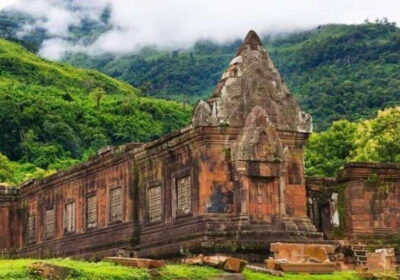 ★ 4.6Mystic Falls & Timeless Temples of Southern Laos TourFrom $9721 reviews
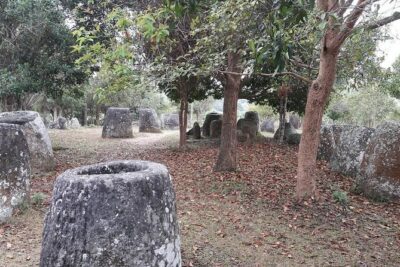 ★ 4.5Plain of jars tour with local guideFrom $1468 reviews
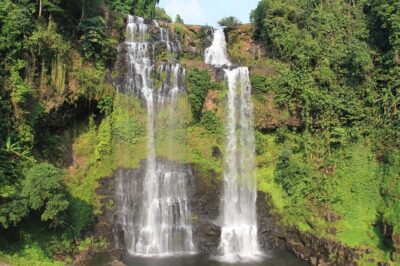 ★ 3.5Full Day Crossing the Bolaven PlateauFrom $1254 reviews
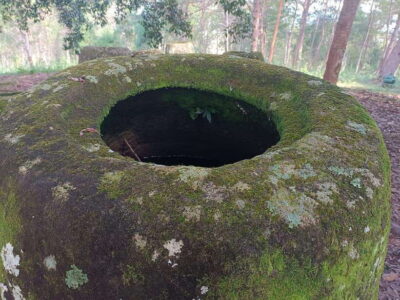 ★ 5.0Plain of jars share group tourFrom $994 reviews
 ★ 5.0Plain of jars private tourFrom $1103 reviews
Every list this tour turns up on