
REVIEW · LUANG PRABANG FARMS & ANIMAL SANCTUARIES
Living Land Rice Farming Experience
Rice mud beats museum hours. I love how this Living Land farm session turns Luang Prabang into a working-rice classroom, not just sightseeing. You spend the morning learning how rice is grown and handled, right beside the fields and mountains.
What I like most is the hands-on farming work itself, plus the fact that the day is run by local people who share real family stories. You also get time for practical side activities like bamboo work, sugar cane pressing, and traditional skills, then finish with rice-based snacks and optional lunch featuring typical Luang Prabang dishes and fruit. The one drawback to think about is that the experience involves real farm mess, and it runs on good weather.
In This Review
- Key things I’d bet on before you go
- Where you’ll work the fields, and how the half-day timing feels
- Living Land Farm: the day in the rice field, step by step
- The buffalo moment
- Beyond rice: bamboo weaving, sugar cane pressing, and blacksmithing
- Lunch, snacks, and what you should do if you care about food
- The community impact: why this isn’t only a nice morning
- Guides you might meet, and why their stories count
- Optional add-ons to waterfalls and caves, and the timing reality
- Price and logistics: is $64.17 good value?
- Who should book, and who might want to skip
- My booking call: should you book Living Land Rice Farming?
- FAQ
- What time does the Living Land Farm experience start?
- How long is the farm portion of the tour?
- Is pickup included?
- Is lunch included in the price?
- How many people are in a group?
- What happens if the tour can’t run due to weather or minimum numbers?
- Can I cancel or change my booking?
Key things I’d bet on before you go

- A real community farm just outside Luang Prabang with working rice fields
- Hands-on rice work from planting steps to harvesting and cooking
- Bonus village skills like bamboo weaving, sugar cane pressing, and blacksmithing
- Rice snacks and optional lunch featuring typical local food and fruit
- Your money supports students and free English classes for the village
- Small groups of up to 20, so questions and pacing feel manageable
Where you’ll work the fields, and how the half-day timing feels
This is a morning-first experience based around a community farm just outside Luang Prabang. The start time is 8:00 am, and the active farm portion runs about 3 hours 20 minutes, with the whole outing clocking in at roughly 5 hours.
That timing matters. Half-day tours can feel rushed, but this one gives you enough time to actually do tasks in the paddy, not just watch. It also helps if you want to keep your afternoons free for temples, the night market, or adding on optional excursions later.
Pickup is offered, and there’s a mobile ticket, which makes it easy to arrive without hunting for paperwork. There are also group discounts, so if you’re traveling with friends or family, it’s often worth asking about how the pricing stacks up for your group size.
Buffalo, bears and rescued elephants, a few more days out
Living Land Farm: the day in the rice field, step by step
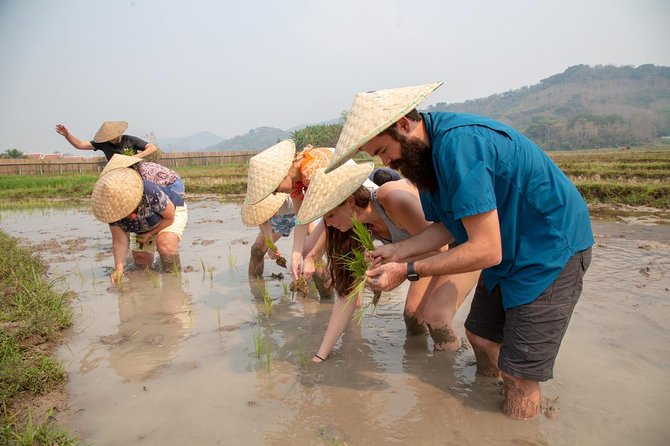
The main event is the Living Land Farm program, focused on rice planting and the everyday rhythm of farm life. Rice is planted all year round here, so you’re not getting a one-season theme. You’ll learn the long process it takes to get from seedlings to food, and you’ll likely get your hands dirty in multiple stages.
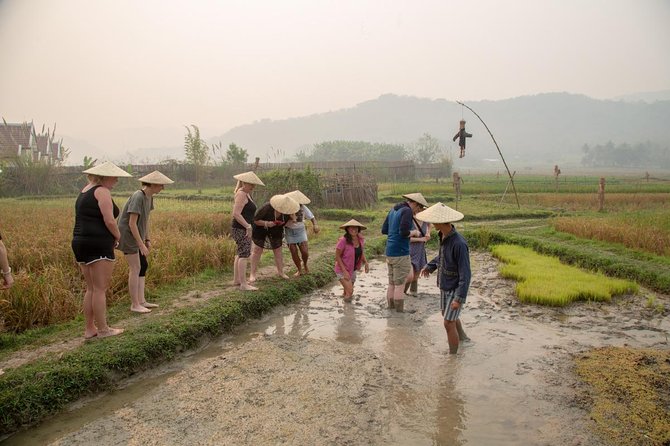
One reason this experience scores so high is the push toward participation. You’re not just standing at the edge with a hat and a phone. Many descriptions include getting involved in tasks like digging planting trenches, working the field, and handling rice as part of the full cycle. There’s also often a point where shoes come off, and you work closer to the ground than you’d expect.
Expect a “many steps” day. One guest described it as a sequence of 14 steps from trench work through planting and later stages. Even if your exact order varies with timing and field conditions, the overall feel is consistent: you learn why each step exists, and you see how labor-heavy rice growing really is.
And yes, you should be prepared for mud. People mention being knee deep at times and getting soaked through. If you hate getting dirty, treat this as a “watch from the sidelines” option, but the whole point here is to participate.
The buffalo moment
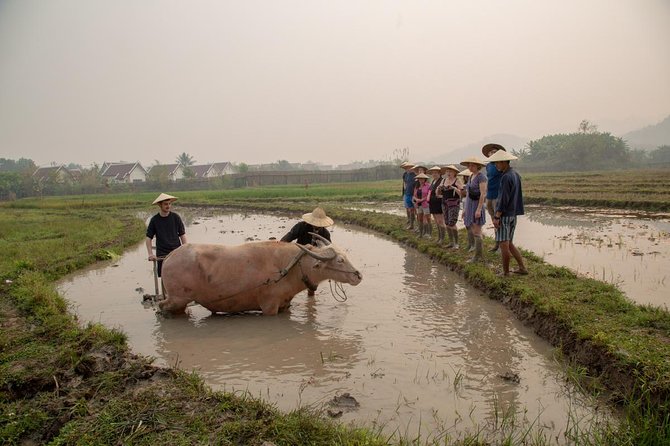
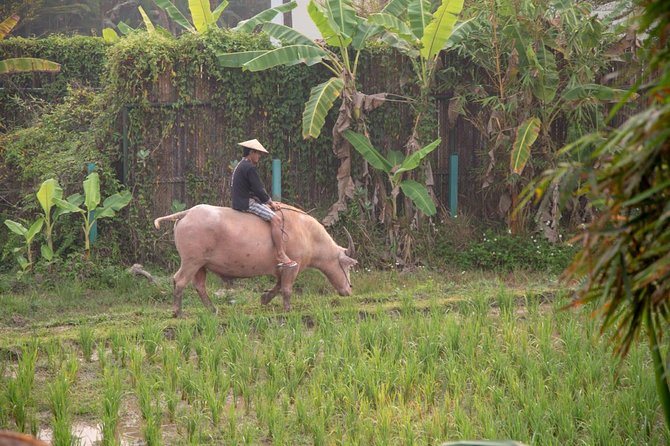
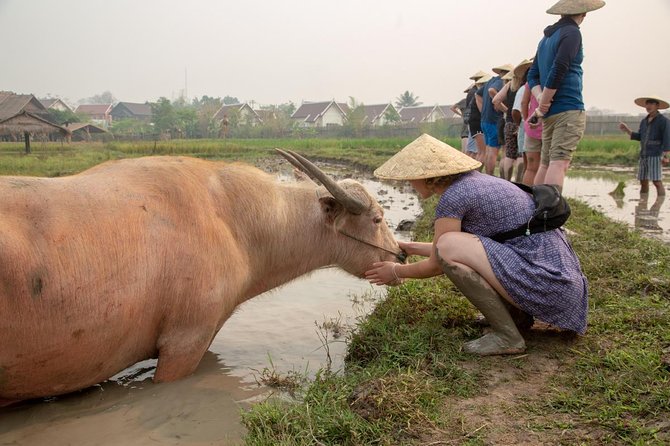
You may work with or near the farm’s water buffalo during field preparation. In one group, the buffalo was named Suzanne, and the story stuck because it made the work feel both practical and human. Even if your day runs differently, the presence of buffalo work is one of the clearest reminders that rice farming in this region is still deeply tied to animals and hands-on muscle.
Beyond rice: bamboo weaving, sugar cane pressing, and blacksmithing
Rice does the heavy lifting, but the day doesn’t stop there. The farm program includes additional activities that help you connect rice growing to the rest of local life.
Here’s what’s listed as part of the experience:
- bamboo weaving
- sugar cane pressing
- blacksmithing
That mix is smart for two reasons. First, it shows how rural households often rely on multiple skills, not just one crop. Second, it gives you breaks from mud work without turning the day into a series of unrelated demos.
If you’re the type of traveler who likes to understand how a community makes things, these workshops give you a grounded answer. You’ll get more out of them if you treat them like skill practice, not like a craft show. Ask questions about how tools are made and used, and you’ll start seeing the links between farm work and daily life.
More Lao smallholdings open to visitors
- Luang Prabang: Organic Farm Experience & Hike to Kuang si
★ 4.4 · 4 reviews - Luang Prabang: Bamboo Forest Cooking-class & Farm Visit
★ 5.0 · 3 reviews
Lunch, snacks, and what you should do if you care about food
The farm program ends with a tasting of rice-based snacks. Even if you skip the lunch option, those snacks help tie the farming lessons to the reality of what rice becomes once it’s processed.
Lunch is included only if you choose the option that includes it. When lunch is part of your booking, it happens on the farm, featuring a selection of typical Luang Prabang dishes and fruit. In plain terms, this matters because it gives your work a payoff, not just a period of muddy activity.
If you’re deciding between skipping or adding lunch, I’d lean toward adding it. The price you pay for the experience becomes more satisfying when you get a full circle: you work in the field, then you eat a meal that connects to what you learned.
The community impact: why this isn’t only a nice morning
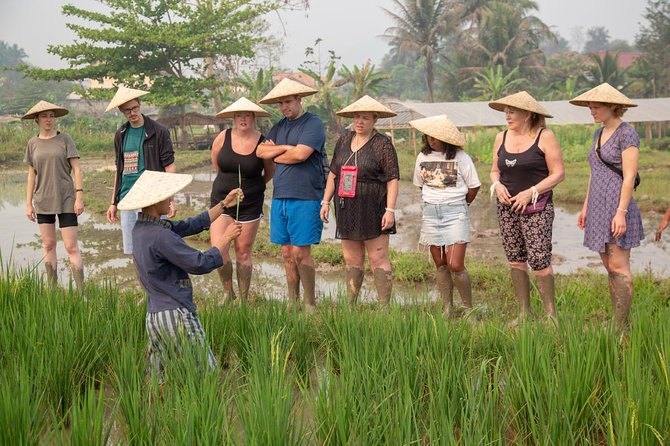
This is one of the most important parts of the whole offer. The proceeds from the rice experience go toward supporting students and village education. The program specifically helps over 60 students with their studies and also supports free English classes for the whole village.
Why I think that matters for you: it changes how you should judge the day. You’re not just paying for an activity you’ll forget in a week. You’re funding education, which tends to have a long tail compared with a one-day photo spot.
Also, because it’s tied to an actual village farm operation, the day feels less like a staged attraction and more like a functioning community space. That’s the difference between “touristic” and “worth it,” even when both claim authenticity.
Guides you might meet, and why their stories count
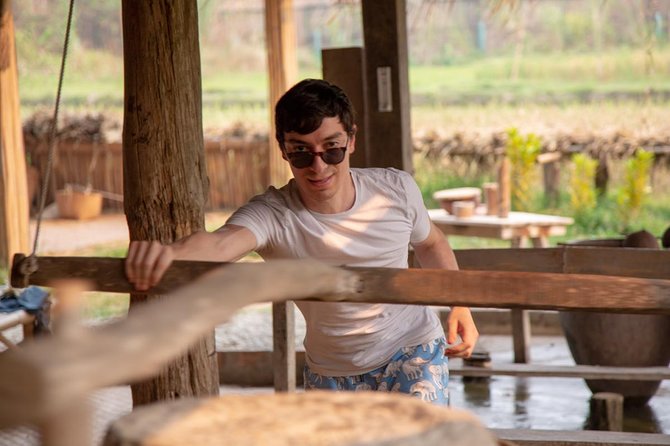
Guides are a big part of the value here. Names highlighted in past groups include Johnny, Geo, Sai, and Kham. People also mention guides sharing family stories, and that personal storytelling can turn the tasks from a checklist into something you can mentally map onto real lives.
If you want to get the most from the day, don’t just focus on doing the work. Ask how rice farming fits into the year, how family roles split tasks, and why certain skills like bamboo work or blacksmithing matter on a farm. Those answers are often where the cultural understanding comes from.
Optional add-ons to waterfalls and caves, and the timing reality
The experience includes options to add on additional excursions such as waterfalls and caves. That’s a great way to stretch a single trip into a fuller day without changing tour companies.
The only caution I’d give is about day flow. When you stack extra stops onto a working farm visit, timing and transport routes can get messy if the schedule isn’t handled tightly. One concern described in the available information points to wasted time when transfers were circuitous. So if you add waterfalls or caves, confirm the order and make sure you understand exactly when and where you’ll be picked up and returned.
Practical advice: if you care most about the farm experience, keep your expectations realistic. The farm session is the core. Add-ons are the bonus.
Price and logistics: is $64.17 good value?
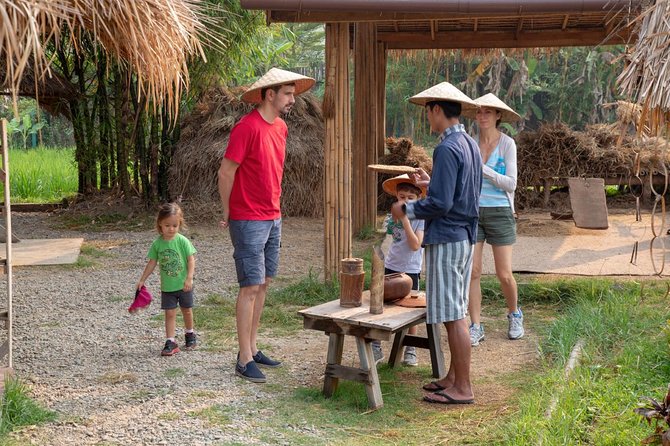
At $64.17 per person, this is not a budget “quick photo” add-on. What makes it feel fair is that the admission ticket for the farm portion is included, and the listed inclusions say all fees and taxes are covered.
The other value driver is time and participation. You’re getting a multi-activity morning with real labor, workshops, snacks, and a meal on request. If you choose the lunch option, you’re also turning the cost into a one-day package, not a pay-only-for-views scenario.
Two logistics points you should factor in:
- Pickup is offered, which often saves time and stress in Luang Prabang.
- There’s a maximum of 20 travelers, which helps keep the pace workable when you’re in and out of mud and tools.
If you’re booking through any third-party platform, do a quick check that you’re paying the correct total. One negative account specifically complains about being charged twice compared with the actual stated price and recommends booking directly. I can’t verify anyone’s billing from here, but you can protect yourself by double-checking totals before you pay.
Who should book, and who might want to skip
This is a strong fit if you:
- like hands-on learning
- don’t mind getting dirty
- want a break from temples and river views
- care about tourism that supports education
It’s less ideal if you:
- want a clean, easy walk with minimal participation
- have serious mobility concerns around uneven, muddy ground
- hate weather-dependent plans, since the experience requires good weather
One more fit question: do you prefer a day focused on farming rather than side activities? The program includes multiple workshops. Even though those are part of the offering, your enjoyment will depend on whether you like switching tasks during the session.
My booking call: should you book Living Land Rice Farming?
Yes, I think you should book this if you want a real sense of how rice becomes food in Laos, and you’re okay with a little mud as the price of admission. The combination of hands-on rice work, practical village skills, rice snack tasting, and education support is a rare mix for the price point.
I’d especially recommend it if you’re traveling with limited time and want one morning that teaches you something concrete. It also works well as a contrast day after slower temple visits, because you’ll come away tired in the best way, with stories you can actually tell.
One final tip before you commit: decide whether you want lunch. If you like making a half-day tour feel complete, choosing the option that includes lunch is usually the move.
FAQ
What time does the Living Land Farm experience start?
The start time is 8:00 am, and the overall outing is about 5 hours.
How long is the farm portion of the tour?
The Living Land Farm program is listed as about 3 hours 20 minutes, with the full experience running approximately 5 hours.
Is pickup included?
Pickup is offered.
Is lunch included in the price?
Lunch is included only if you choose the option including Lunch. Rice-based snacks are part of the farm program.
How many people are in a group?
The tour lists a maximum of 20 travelers.
What happens if the tour can’t run due to weather or minimum numbers?
This experience requires good weather. If it’s canceled due to poor weather, you’ll be offered a different date or a full refund. If it’s canceled because the minimum number of travelers isn’t met, you’ll be offered a different date or experience, or a full refund.
Can I cancel or change my booking?
This experience is non-refundable and cannot be changed for any reason.
More Lao Farms to Visit

More Tour Reviews in Luang Prabang

More Farm and Animal Days


Just added to the guide: more things to do in Laos
- Private Luang Prabang City Tour★ 5.0 · 3 reviews
- Luang Prabang Night-time Explorer★ 3.5 · 3 reviews
- 3 Days The Plain of Jars and Xieng Khouan (Depart from Luang Prabang)★ 5.0 · 3 reviews
- Luangprabang: Dinner with Lao Traditional Dance Performance★ 4.0 · 3 reviews
- Luang Prabang: Mekong River Cooking Class with Hotel Pickup★ 5.0 · 3 reviews
- Luang Prabang: Bamboo Forest Cooking-class & Farm Visit★ 5.0 · 3 reviews
Luang Prabang Farms & Animal Sanctuaries, side by side.
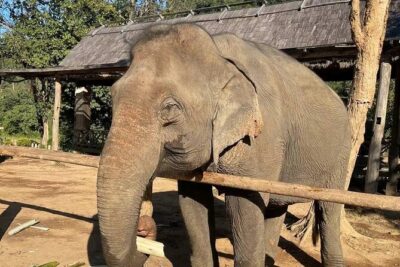 ★ 5.0Laos Elephant Sanctuary keeper+ Kuangsi waterfall +Hmong villageFrom $11825 reviews
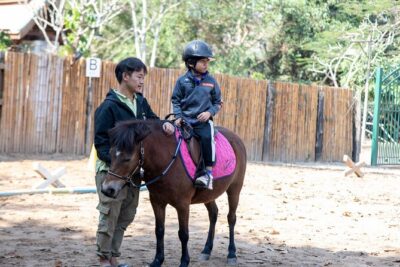 ★ 5.0Pony Riding in Luang PrabangFrom $5916 reviews
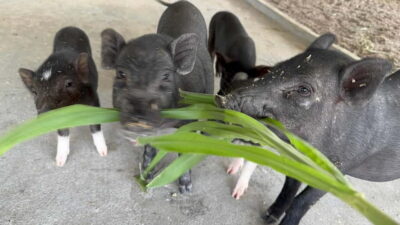 ★ 4.7Farm Tour and Buffalo Buffet AdventureFrom $1111 reviews
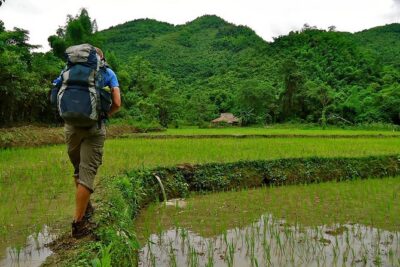 ★ 5.0Day Trek to Kuangsi Waterfall and Bear Sanctuary – Luang Prabang full day tourFrom $929 reviews
 ★ 5.0Laos Buffalo Dairy Tours Interact, Learn and Taste Fresh FlavorsFrom $146 reviews
 ★ 4.4Organic Farm Experience & Hike to Kuang siFrom $794 reviews
 ★ 5.0Bamboo Forest Cooking-class & Farm VisitFrom $1003 reviews
Every list this tour turns up on