
REVIEW · LAO COOKING CLASSES
Laos Cooking Class in Luang Prabang
Smell, chop, and taste Lao flavor fast. This Luang Prabang class is interesting because you get ingredient guidance before you cook, starting with Phosy Market and then moving to a scenic open-kitchen setup with Chef Sit teaching you hands-on. I especially like that it stays small-group sized, so you are not just watching from the back. The one drawback to plan for is that the market can feel chaotic if you are not used to crowded stalls, strong aromas, and lots of pointing.
You also get a real sense of how Lao flavors come together. You’ll pick ingredients (and learn what they do), then make classic dishes like spicy dipping sauces, Mok Pa, lemongrass stuffed chicken with herbs, and laap, with enough time to actually do the cooking. I like that you leave with a recipe book, so the class does not vanish the next day.
Logistics are straightforward. Expect about 4 hours of cooking and eating, starting at 8:30 am and capped at 12 travelers, and the tour ends back where you started. A mobile ticket is used, and you’ll want to book for dates that are open, since it is not available April 13 to 16 for Laos New Year.
In This Review
- Key highlights worth planning for
- From 8:30 am market vibes to a full Lao meal
- Phosy Market: learning Lao ingredients without the guesswork
- The kitchen setting that makes learning easier
- Cooking Lao classics: sauces, Mok Pa, lemongrass chicken, and laap
- Spicy Lao dipping sauces
- Mok Pa
- Lemongrass stuffed chicken with herbs
- Laap
- More dishes in one session
- Picking ingredients in the right order, so cooking feels logical
- The meal: you eat what you made, not a separate restaurant spread
- What you’ll take home: the recipe book and a usable Lao flavor map
- Who this Luang Prabang Lao cooking class is best for
- Price and logistics: why $58 feels fair here
- Practical tips: what to bring and how to enjoy it more
- Should you book this Luang Prabang Laos cooking class?
- FAQ
- How long is the Laos Cooking Class in Luang Prabang?
- What time does the class start?
- Where is the meeting point?
- Does the morning tour include visiting a market?
- What dishes will we learn to make?
- Is the meal included?
- What is the maximum group size?
- Is the class available during Laos New Year (April 13 to 16), and can I cancel for a refund?
Key highlights worth planning for
- Phosy Market ingredient picking for a practical intro to Lao pantry staples
- Chef-led hands-on cooking with lots of guidance, not just a demo
- Classic dishes in one meal, including Mok Pa and laap
- Garden and herb-focused learning, so you understand flavor sources
- Small group size (up to 12) for better attention and smoother pacing
From 8:30 am market vibes to a full Lao meal
This class is built as a true half-day food experience, not a quick show-and-tell. It starts at 8:30 am at TamarindV4VR+VMF, Kingkitsarath Rd, Luang Prabang, and runs for about 4 hours. You’ll come back to the same meeting point when it’s done.
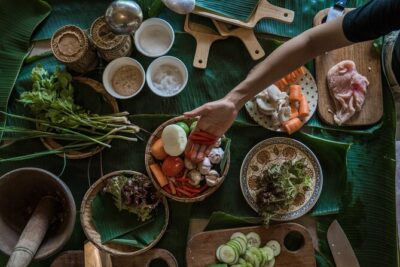
If you book the morning tour, you get an added layer: a market visit first. That matters, because you’re not guessing what you’re buying or why you need it. Instead, you learn what ingredients look like, how locals use them, and what you should look for when you cook your dishes later.
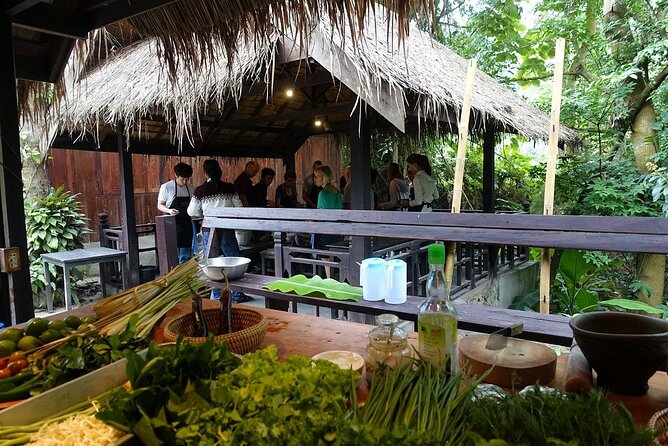
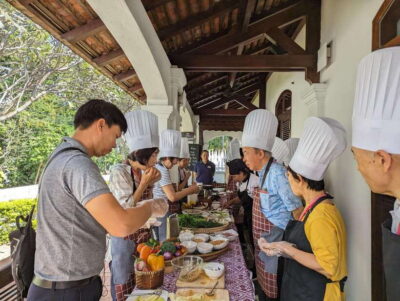
After the market, you shift from shopping mode to cooking mode. The class takes you to a restaurant kitchen area that feels open, rural, and picturesque, which makes the whole thing more enjoyable than a plain indoor classroom. You work on multiple dishes, and the meal you eat is made from what you cooked during the session.
Staying on in Luang Prabang? Here is what else fills a day there

Phosy Market: learning Lao ingredients without the guesswork
For the morning slot, you’ll visit a local market and sample ingredients along the way. One review mentioned Phosy Market specifically, and that matches the vibe of a place where you quickly realize Lao cooking starts with herbs, aromatics, and fermented or pickled touches you might not be used to seeing.
Here’s the practical value: ingredient selection. In the market, you are able to select your own ingredients for the dishes you’ll prepare. That gives you a mental checklist for the flavors that show up again and again in Lao food, like herbs, chili components, and aromatics that are not just for taste but also for balance.
Also, go in with the right expectations. If you’re easily thrown off by crowds, bright stalls, and lots of commotion, the market can feel intense at first. The best way to handle it is simple: treat it like part of the lesson, ask questions early, and focus on a few ingredient categories rather than trying to understand every stall at once.
The kitchen setting that makes learning easier
Once you arrive at the cooking area, the atmosphere is part of why this class scores well. Reviews describe the kitchen as open and scenic, which keeps the session from feeling cramped or formal. Even better, the setup is designed for teaching, not just cooking.
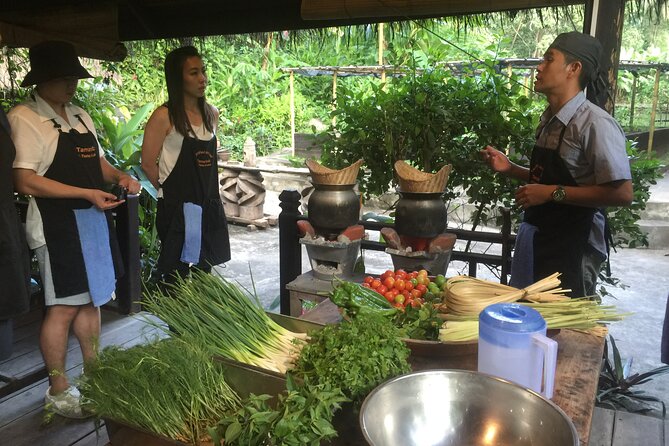
Chef Sit is specifically mentioned in reviews, and the teaching style seems to be the key. People say he makes it simple, and that after an initial demonstration you each get hands-on time. That pacing is smart. It reduces frustration for first-timers while still giving experienced cooks enough responsibility.
Group size matters here. With a maximum of 12 travelers, you get more personal attention than you would in a large group cooking show. In practice, this means you can ask what to do next, get help adjusting technique, and learn why something tastes the way it does, instead of rushing through the steps.
Cooking Lao classics: sauces, Mok Pa, lemongrass chicken, and laap
The menu is where you’ll feel the real payoff. You’ll craft enough dishes to make a full Lao meal, with a focus on traditional flavors and methods. While details like exact cooking technique can vary by class flow, the dish lineup is clear, and each one teaches something different.
More Lao kitchens that will teach you laap and sticky rice
- Luang Prabang: Cooking Class at the Former Royal Palace
★ 4.9 · 51 reviews - Day-time Bamboo weaving & Cooking Classes join-in
★ 5.0 · 38 reviews - Evening Bamboo weaving & Cooking classes join-in
★ 5.0 · 17 reviews - Tribal Cooking Class in Luang Prabang Forest and visit
★ 5.0 · 15 reviews
Spicy Lao dipping sauces
You’ll make Lao spicy dipping sauces. This is not just a flavor lesson, it’s a structure lesson. In Lao cooking, dipping sauces often combine chili heat, salt, sour notes, and aromatic herbs. When you learn to balance those elements, you start understanding how many Lao dishes are built around a sauce component.
If you are sensitive to spice, tell your instructor at the start. Even if you cannot avoid chili entirely in Lao cuisine, you can usually control how much ends up in your personal serving and how you pair it.
Mok Pa
Mok Pa is one of the standout dishes on the list. It’s commonly associated with fish and herbs, and it carries that “special occasion” energy even when you’re making it in a casual class setting. Cooking Mok Pa teaches you how herbs and seasonings behave under gentle heat, and why Lao flavors often feel fragrant rather than heavy.
Lemongrass stuffed chicken with herbs
Next comes lemongrass stuffed with chicken and herbs. Lemongrass is a signature scent in the region, and this dish is a great way to understand it as a building block, not just a garnish. You’ll practice stuffing and seasoning, then learn how the herbs and aromatics influence the final flavor.
Laap
Laap is another key dish on the list, and it helps complete the meal. Laap is often known for being spicy and herb-forward, so it complements the saucy dishes and brings freshness to the plate. If you’ve ever wondered why Lao food can taste bright even when it’s spicy, laap is a good answer in edible form.
More dishes in one session
The class includes additional Lao dishes beyond the ones listed above. That variety is useful if you’re trying to build a mental map of Lao cuisine rather than memorize one recipe. You’ll leave knowing multiple flavor pathways, not just one technique.
Picking ingredients in the right order, so cooking feels logical
One of the smartest parts of this experience is that ingredient learning happens before the main work. You start by meeting your instructor at the meeting point, and if you choose morning, you visit the market first. Then you return to the kitchen to cook.
That order helps you connect flavors to ingredients. When you see an herb or aromatic in a stall and then later cut it into your dish, your brain does the linking. That is why the class can feel easier than you expect. Instead of following steps you do not understand, you learn what each ingredient is doing.
You also get a personal recipe book. That is not just paper to take home. It’s a practical reference for after the class, especially if you want to recreate the sauces and dishes later without trying to guess amounts.
The meal: you eat what you made, not a separate restaurant spread
This is one of those classes where the meal actually fits the learning goals. The class includes an included meal, and you’ll sample your creations as part of the session. That makes it easier to judge what worked, what needs more balance, and how Lao flavors come together.
Eating your own cooking also boosts confidence. Even if you only cook parts of each dish during the class flow, tasting the full result helps you understand the whole dish, not just your assigned station.
If you’re a foodie who likes structure, think of the meal as a tasting menu built from lessons. You’ll likely notice how sauces change the way grilled or steamed items taste, and how fresh herb elements keep the flavor from getting flat.
What you’ll take home: the recipe book and a usable Lao flavor map
The take-home recipe book is a major reason to choose a cooking class like this. You’re not leaving with only memories and photos. You’re leaving with instructions designed for continuing at home.
The best part is that the recipes are tied to the dishes you cooked in class. That matters, because you are not translating Lao cuisine from scratch. You already practiced key steps, so you can follow along with fewer doubts later.
If you cook at all, you’ll probably use the book. And if you cook rarely, it still helps because you can focus on just one or two recipes first. Start with something sauce-based, then move to a dish that uses lemongrass or herbs, and you’ll build momentum.
Who this Luang Prabang Lao cooking class is best for
This class is designed for all ages and skill levels. Reviews mention that some people had little cooking background, and still felt the experience worked. That tells me the instruction is paced to help novices, without making advanced cooks feel bored.
It also works well for:
- Food travelers who want context, not just a cooking demo
- People who want to shop smarter at Lao markets in the future
- Couples and small groups who want hands-on time together
- Visitors who prefer an organized half-day activity with a meal included
If you are traveling with very young kids, the “all ages” claim suggests it can be doable, but cooking sessions do involve heat and knives. You’ll want to judge your child’s comfort level and supervise carefully.
Price and logistics: why $58 feels fair here
The price is $58.00 per person, and the class runs about 4 hours. You also get cooking class and ingredients included, plus an included meal. You’re not paying extra for the ingredients or for lunch, which is where many cooking classes quietly add cost.
Is it good value? For Luang Prabang, value comes down to three things:
- You learn multiple dishes, not just one
- You get market and ingredient learning (if you choose morning)
- You leave with a recipe book
When those pieces are included, $58 can make sense, especially because the max group size is capped at 12, so you are more likely to get real instruction and not just spend the session hovering.
Logistics are also simple. Start at a clear meeting point in central Luang Prabang, and the experience ends back there. A mobile ticket is used, which is convenient if you are juggling other tours and tickets during your trip.
Practical tips: what to bring and how to enjoy it more
You do not need to show up prepared like a chef, but a few things help.
- Wear comfortable clothes you can cook in, because you’ll be chopping and working around food aromas.
- Bring a small towel or wet wipes, since market visits and cooking can get messy.
- If spice is an issue for you, tell the instructor early so you can adjust your portion.
- Take notes during the recipe book moments. Even basic details like how sauce consistency should look can help later.
One more thing: plan your schedule. A 4-hour class with a meal means you’ll want the rest of your day clear enough to relax, digest, and maybe do a little wandering after.
Should you book this Luang Prabang Laos cooking class?
Book it if you want a hands-on way to learn Lao cuisine, especially if you care about ingredients, sauces, herbs, and classic dishes like Mok Pa and laap. The small group size and hands-on instruction are a big deal, and the fact that you get an included meal plus a take-home recipe book makes this feel like more than a one-time experience.
Skip it or reconsider if you hate crowded market environments. The morning market can be intense for first-timers, and it may not be your kind of start to the day. Also, if your cooking style is strictly avoidant of spice, you’ll want to communicate clearly with your instructor so you can manage chili levels.
If you’re flexible and excited to learn, this is a strong Luang Prabang option for a half-day activity that ends with food you actually made.
FAQ
How long is the Laos Cooking Class in Luang Prabang?
The class lasts about 4 hours.
What time does the class start?
The start time is 8:30 am.
Where is the meeting point?
The meeting point is TamarindV4VR+VMF, Kingkitsarath Rd, Luang Prabang, Laos.
Does the morning tour include visiting a market?
Yes. If you choose the morning tour, you have the chance to visit the local market and learn about Lao ingredients, including selecting ingredients for your dishes.
What dishes will we learn to make?
You will learn dishes such as Lao spicy dipping sauces, Mok Pa, lemongrass stuffed with chicken and herbs, laap, and more.
Is the meal included?
Yes. A meal is included, and you can sample what you cook.
What is the maximum group size?
The experience has a maximum of 12 travelers.
Is the class available during Laos New Year (April 13 to 16), and can I cancel for a refund?
The tour is not available on April 13th to 16th. You can cancel up to 24 hours in advance for a full refund.
More Tour Reviews in Luang Prabang


More Lao Kitchens to Cook In
More Luang Prabang Days Out
Just added to the guide: more things to do in Laos
- Private Luang Prabang City Tour★ 5.0 · 3 reviews
- Luang Prabang Night-time Explorer★ 3.5 · 3 reviews
- 3 Days The Plain of Jars and Xieng Khouan (Depart from Luang Prabang)★ 5.0 · 3 reviews
- Luangprabang: Dinner with Lao Traditional Dance Performance★ 4.0 · 3 reviews
- Luang Prabang: Mekong River Cooking Class with Hotel Pickup★ 5.0 · 3 reviews
- Luang Prabang: Bamboo Forest Cooking-class & Farm Visit★ 5.0 · 3 reviews
Lao Cooking Classes, side by side.
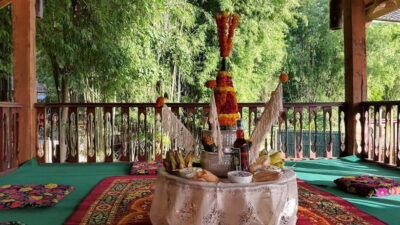 ★ 4.9Evening Cooking Class & Local Baci CeremonyFrom $51151 reviews
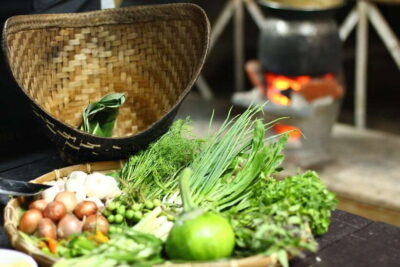 ★ 5.0Bamboo Weaving Workshop & Cooking ClassFrom $4496 reviews
 ★ 4.9Cooking Class at the Former Royal PalaceFrom $4551 reviews
 ★ 5.0Day-time Bamboo weaving & Cooking Classes join-inFrom $2538 reviews
 ★ 5.0Evening Bamboo weaving & Cooking classes join-inFrom $2517 reviews
 ★ 5.0Tribal Cooking Class in Luang Prabang Forest and visitFrom $7815 reviews
 ★ 5.0Traditional Market Tour and Private Laotian Cooking Class with a LocalFrom $9213 reviews
 ★ 5.0The Namkhan – Cooking ClassFrom $638 reviews
Every list this tour turns up on