
REVIEW · LAO COOKING CLASSES
Tribal Cooking Class in Luang Prabang Forest and visit
Cooking in the forest sounds adventurous. This hands-on tribal cooking class in Luang Prabang pairs a short walk into the primary forest with foraging edible plants and learning classic Laotian dishes, using bamboo and forest materials the way the KHMU tribe does. I especially love that you make your own bamboo eating tools, including chopsticks and a bamboo drinking glass you can take home. I also like how the guide turns cooking into a story you can taste, not a rushed demo. One possible drawback: it is not an all-day jungle hike, so if you want serious, hours-long wilderness trekking, this may feel more like a nature-and-countryside experience than a deep expedition.
You start and finish at Naga Lodge – Eco Resort Luang Prabang (Ban Xieng Mouark), and you get private transportation plus lunch, snacks, and bottled water built into the price. Expect about 5 hours total, and you’ll use a mobile ticket. If you go in rain season, plan to get a little hands-on with the setup, because the cooking area may need quick shelter.
In This Review
- Key highlights you will actually care about
- From pickup at Naga Lodge to a forest kitchen
- The short walk into the primary forest and what to expect
- A quick heads-up for your comfort
- Foraging with a KHMU facilitator, and learning which plants matter
- How to think about safety and taste
- Cooking at the carbet: bamboo, stone, and forest products
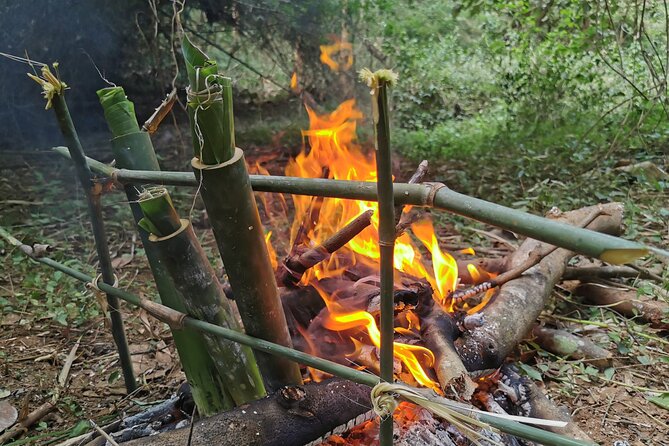
- Fire from scratch and hands-on prep
- A possible extra survival-style moment
- Your Laotian meal, and why bamboo utensils change the experience
- Eating tools you make yourself
- Price and value: what you get for $78.08
- Who this suits best
- What to bring so the day stays easy
- Timing, group size, and how the private format feels
- Final call: should you book this Luang Prabang forest cooking class?
- FAQ
- How long is the tribal cooking class?
- Where does the activity start and where does it end?
- Is pickup included?
- What is included in the price?
- Is it a private tour?
- Do I need a print ticket?
- When will I receive confirmation after booking?
- How much does it cost?
- What is the cancellation policy?
- What if the tour is canceled due to minimum travelers?
Key highlights you will actually care about
- Pick real edible plants before cooking, guided by a KHMU facilitator in the Luang Prabang forest area
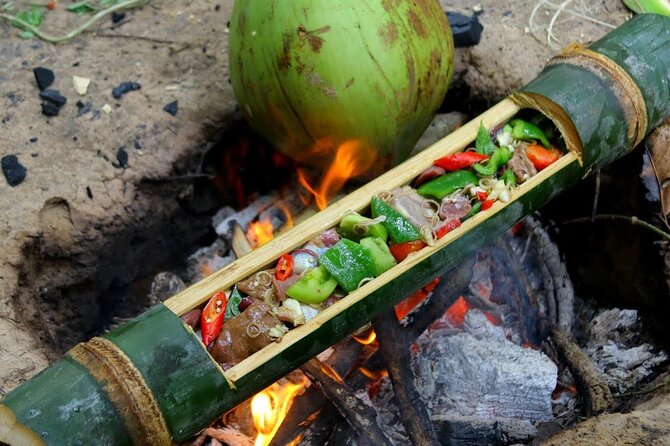
- Cook with bamboo and stone tools, using forest products rather than a modern kitchen setup
- Make your own bamboo chopsticks and drinking glass, which turns the meal into a keepsake
- Learn practical methods, like starting fires from scratch and preparing ingredients on-site
- Small, private group feel, since it’s just your group on this outing
- A nature-forward timeline, including a short forest walk and then a cooking shelter (a carbet)
From pickup at Naga Lodge to a forest kitchen
This is the kind of tour that feels like it belongs to Luang Prabang’s outdoorsy side, not the usual classroom-style cooking event. You’ll be picked up at Naga Lodge – Eco Resort Luang Prabang in Ban Xieng Mouark, then transported to the start of the forest and cooking area.
The total time is about 5 hours. That’s long enough to learn several techniques and actually eat well, but short enough that you can still do other Luang Prabang plans the same day. If you’re staying in the riverside hotel zone, the pickup and private transport matter, because you do not have to puzzle out how to get out to the forest edge.
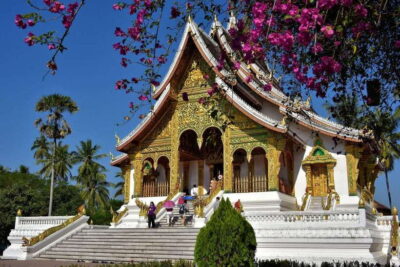
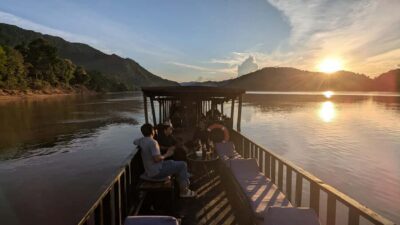
Staying on in Luang Prabang? Here is what else fills a day there
The short walk into the primary forest and what to expect
Your day starts with a path that takes you into the forest to learn how people in Laos cook with what the land provides. You are walking into the primary forest area for about 10 minutes, not embarking on a multi-hour trek.
That short walk is important for two reasons. First, it keeps the experience accessible even if you are not a “hike all day” person. Second, it helps you focus on the main point, which is the food and the local cooking approach, not fitness.
As you go, you’ll learn what plants are edible and relevant to the dishes you’ll cook later. One great thing about this format is that your cooking skills come from observation. You are seeing the ingredient before you are tasting the final dish, so the lesson actually sticks.
A quick heads-up for your comfort
Because it’s outdoors, you should assume you’ll deal with uneven ground and the possibility of rain. In past sessions, groups have even helped fashion rain cover near the cooking clearing, so being ready to get your hands a little dirty is part of the deal.
Foraging with a KHMU facilitator, and learning which plants matter
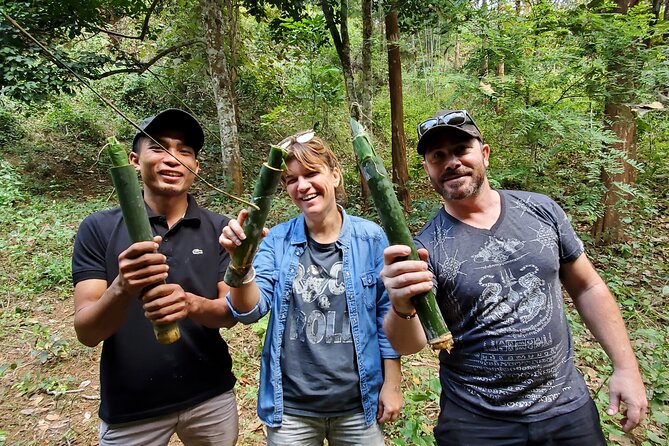
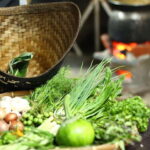
The heart of the experience is foraging with a native facilitator from the KHMU tribe. You’ll discover exotic edible plants from the local forest and learn how they fit into traditional Laotian cooking.
This isn’t just about collecting. It’s about learning the logic behind the food: what grows nearby, what it’s used for, and how local cooks turn forest ingredients into satisfying meals. Guides like Peng and Pheng have led past classes, and the common thread in their approach is practical knowledge, not vague explanations.
If you’re a city-dweller, this part is often a surprise in a good way. You may think you’ll be doing a little light picking and then heading straight to cooking, but the plant walk builds the next steps. You end up with a real sense of why those ingredients get used again and again.
More Lao kitchens that will teach you laap and sticky rice
- Luang Prabang: Cooking Class at the Former Royal Palace
★ 4.9 · 51 reviews - Day-time Bamboo weaving & Cooking Classes join-in
★ 5.0 · 38 reviews - Evening Bamboo weaving & Cooking classes join-in
★ 5.0 · 17 reviews - Tribal Cooking Class in Luang Prabang Forest and visit
★ 5.0 · 15 reviews
How to think about safety and taste
You will be in good hands because the learning is guided. Still, the takeaway for you is simple: do not treat this as free-for-all foraging. Follow instructions closely, and trust the facilitator on what’s edible and how it should be handled.
Cooking at the carbet: bamboo, stone, and forest products
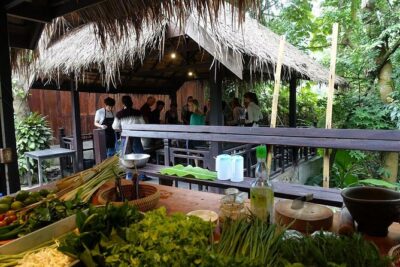
Once you reach the cooking area, you’ll move to a carbet-style setup. Think of it as an outdoor cooking shelter where the method stays traditional, not just the setting.
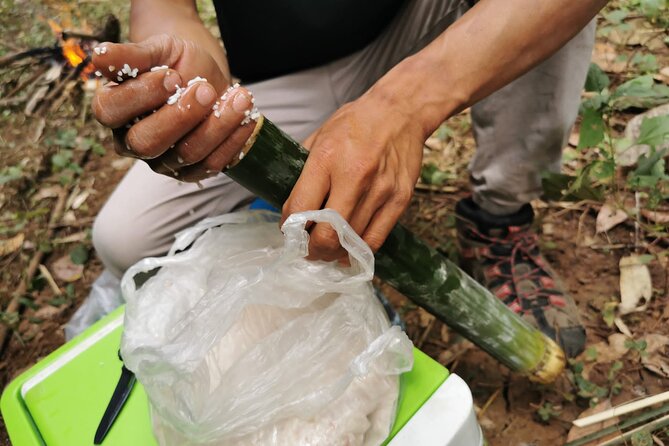
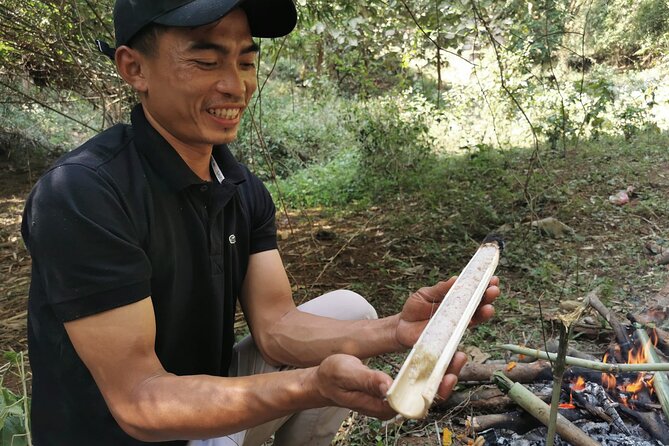
Here’s what makes this stage memorable. You learn tribal cooking techniques using bamboo as a core raw material and using stone and other forest products as part of the process. Bamboo isn’t just decoration. It shows up in tools, prep, and how you handle food.
Bamboo platforms, machetes, and quick rain cover have shown up in past classes, too. If weather shifts, you might see the group adapting on the spot, cutting or shaping materials to make the area workable.
Fire from scratch and hands-on prep
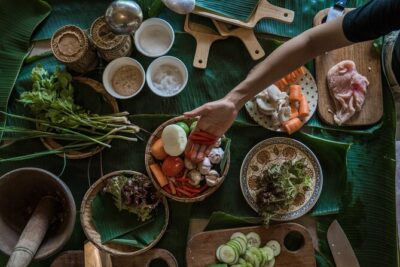
One of the most valued parts from past experiences is the feeling that you start cooking from the ground up. Some classes include learning how to start fires from scratch and then cook using what you’ve gathered. You may also get to work with banana leaves, since past groups reported harvesting fresh banana leaves as part of their ingredient prep.
Even if you’re not a survival-skills person, you’ll find that these techniques make cooking feel real. You’re not just chopping, you’re building a working system with natural materials.
A possible extra survival-style moment
Some sessions add additional hands-on learning, like learning a simple trap using local materials. It’s not described as guaranteed for every booking, so treat it as a bonus if it appears on your day. Either way, the focus stays on food and how local people handle daily needs with forest resources.
Your Laotian meal, and why bamboo utensils change the experience
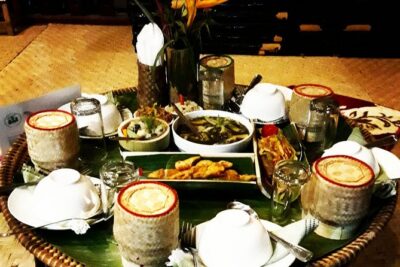
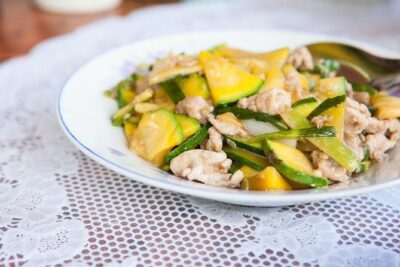
The class ends with lunch that you cook and then eat. Included lunch plus snacks plus bottled water means you’re not forced into budgeting for meals separately, which is a real value boost at this price point.
What you’ll notice is that the food tastes different because you built it step by step. The flavors feel connected to the ingredients you gathered and the bamboo methods you used. That’s the secret of good “from nature to table” experiences, you understand the chain.
Eating tools you make yourself
One of the most praised parts is making your own eating chopsticks and a glass made of bamboo. You’ll craft these during the course, and you can take them home as a souvenir.
This is more than a cute photo moment. Bamboo tools help you slow down. You pay attention to how you use them, how food transfers, and how the meal becomes part craft and part cooking lesson. When you take them home, you can recreate the memory whenever you use the chopsticks at home.
Price and value: what you get for $78.08
At $78.08 per person for about 5 hours, this is not the cheapest cooking class you’ll see in Laos. But it often earns its price in very practical ways.
You get:
- Private transportation
- Bottled water
- Lunch and snacks
- Cooking tools and utensils for the class
- A nature-based component with plant gathering and traditional cooking methods
- Bamboo utensils you make (chopsticks and glass), plus learning from a KHMU facilitator
That bundle matters. A lot of cooking classes include a meal and a recipe card. Here you’re also paying for access to the forest edge, hands-on crafting, and the guide’s tribal cooking knowledge. The take-home bamboo items are also a tangible value, since you’re not leaving with just a full stomach.
If you’re short on time in Luang Prabang, the 5-hour length is also a value factor. You’re getting a “whole experience day” without eating up your entire itinerary.
Who this suits best
This is a great fit if you:
- Want authentic, ingredient-based learning rather than a purely indoor class
- Like outdoor nature time, but not long treks
- Enjoy hands-on making and cooking with your own tools
- Want cultural context from a KHMU facilitator, not just a generic cooking lesson
If your idea of “nature” means long hiking routes and big jungle views, you might want to adjust expectations. The forest portion is short, and the rest of the day is focused on cooking at the shelter.
What to bring so the day stays easy
Because this is outdoors and active, pack for comfort. The tour includes water and food, but it does not replace basic field-day gear.
Bring:
- Closed-toe shoes with grip for forest paths and uneven ground
- Light rain protection, like a compact rain jacket
- Insect repellent
- Sun protection (hat or sunscreen), especially if the sky clears between stops
- A small towel or wipes, because you’ll be handling natural materials
Also, wear clothes you don’t mind getting a little dusty. Bamboo and forest prep can leave trace marks, and you’ll enjoy the work more if you’re not babying your outfit.
Timing, group size, and how the private format feels
This is a private tour/activity, meaning only your group participates. For a cooking class, that matters. You get more attention, more time to ask questions, and fewer worries about keeping up with a large crowd.
It’s also helpful if you’re traveling as a pair or as a small group, since you can coordinate pacing on the forest path and cooking steps. If you are going solo, you might find that you need to book for two, based on a past experience. That may not be true for every date, but it’s worth checking before you lock it in.
Final call: should you book this Luang Prabang forest cooking class?
I think you should book this if you want a cooking experience with real local texture. The combination of plant picking, bamboo-based cooking, and making chopsticks plus a bamboo glass gives you more than a one-time meal. You leave with knowledge you can use later and a take-home souvenir that actually connects to what you did.
Skip it or adjust expectations if you’re chasing a long, hardcore jungle trek. The forest walk is short, and the day is mainly about cooking and crafting in an outdoor shelter setting.
If you want one “signature day” in Luang Prabang that’s hands-on, culturally grounded, and good value for what’s included, this is a strong choice.
FAQ
How long is the tribal cooking class?
It runs for about 5 hours.
Where does the activity start and where does it end?
It starts at Naga Lodge – Eco Resort Luang Prabang (Ban Xieng Mouark, Luang Prabang) and ends back at the same meeting point.
Is pickup included?
Yes, pickup and private transportation are included.
What is included in the price?
The price includes private transportation, bottled water, lunch, snacks, and the tools and utensils needed for the cooking class.
Is it a private tour?
Yes. It is private, and only your group will participate.
Do I need a print ticket?
No. You’ll have a mobile ticket.
When will I receive confirmation after booking?
You receive confirmation at booking unless you book within 1 day of travel, in which case confirmation is received as soon as possible, subject to availability.
How much does it cost?
The price is $78.08 per person.
What is the cancellation policy?
You can cancel for free up to 24 hours in advance for a full refund. If you cancel less than 24 hours before the start time, the amount you paid is not refunded.
What if the tour is canceled due to minimum travelers?
If it’s canceled because the minimum isn’t met, you’ll be offered a different date or experience, or you’ll receive a full refund.
More Tour Reviews in Luang Prabang
More Lao Kitchens to Cook In
More Luang Prabang Days Out
Just added to the guide: more things to do in Laos
- Private Luang Prabang City Tour★ 5.0 · 3 reviews
- Luang Prabang Night-time Explorer★ 3.5 · 3 reviews
- 3 Days The Plain of Jars and Xieng Khouan (Depart from Luang Prabang)★ 5.0 · 3 reviews
- Luangprabang: Dinner with Lao Traditional Dance Performance★ 4.0 · 3 reviews
- Luang Prabang: Mekong River Cooking Class with Hotel Pickup★ 5.0 · 3 reviews
- Luang Prabang: Bamboo Forest Cooking-class & Farm Visit★ 5.0 · 3 reviews
Lao Cooking Classes, side by side.
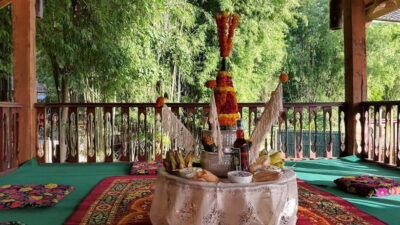 ★ 4.9Evening Cooking Class & Local Baci CeremonyFrom $51151 reviews
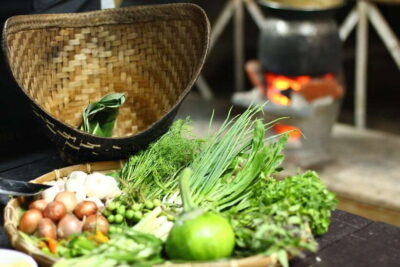 ★ 5.0Bamboo Weaving Workshop & Cooking ClassFrom $4496 reviews
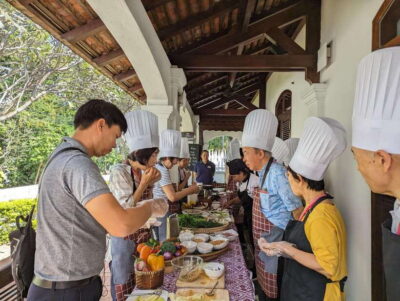 ★ 4.9Cooking Class at the Former Royal PalaceFrom $4551 reviews
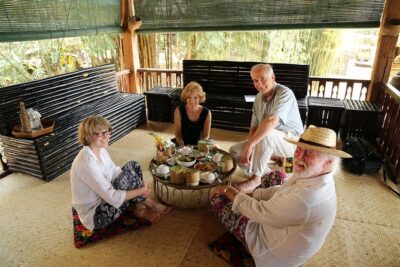 ★ 5.0Day-time Bamboo weaving & Cooking Classes join-inFrom $2538 reviews
 ★ 5.0Evening Bamboo weaving & Cooking classes join-inFrom $2517 reviews
 ★ 5.0Traditional Market Tour and Private Laotian Cooking Class with a LocalFrom $9213 reviews
 ★ 5.0The Namkhan – Cooking ClassFrom $638 reviews
 ★ 4.5Laos Cooking Class in Luang PrabangFrom $587 reviews
Every list this tour turns up on